SLOW VALE Play as a guest

SLOW VALE

A detailed
AI city simulation

Slow Vale is a detailed AI city simulation. Create a resident, follow their life, and stay in touch through texts, calls and gifts.

Your resident moves around, eats, sleeps, works and makes friends on their own. Other players' residents share the same world. They can talk, trade, have dinner, fall in love and live together.

Free to try in your browser · No email or password needed

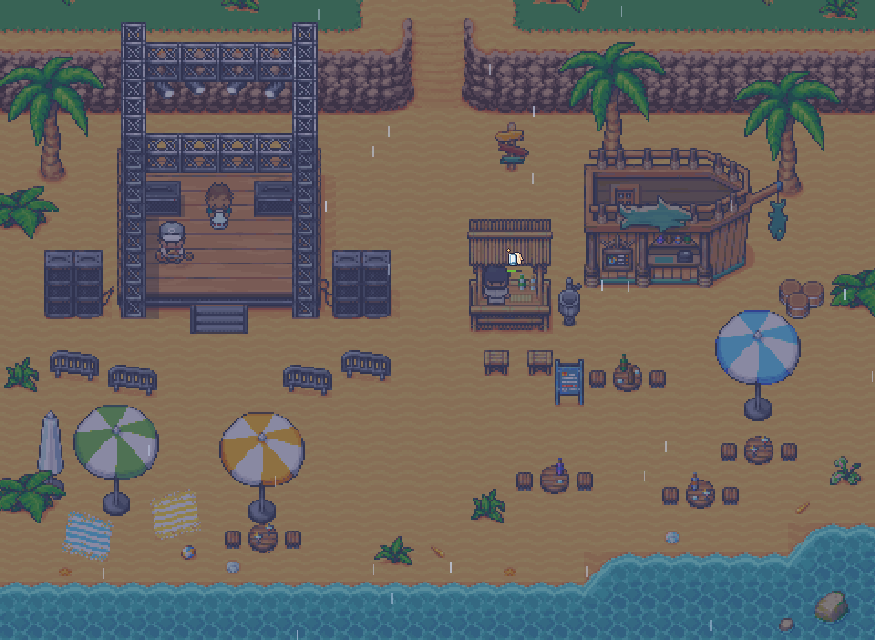
Residents at a beachside bar in Slow Vale on a rainy evening
A rainy evening in Slow Vale

FROM THE DEVELOPER

How I built a detailed AI city simulation

I started with a virtual pet. A year later, I was running a city where residents work, trade and live together. Here’s how I built a detailed AI city simulation, how I keep model calls affordable, and what I learned from four months of operation.

Read the full story

01 / RELATIONSHIPS

Getting to know the neighbors

Residents have their own personalities, memories and plans. They meet at work and around the city, exchange contact details, and keep in touch by text and phone.

Friends, dinners and shared homes

As they grow closer, residents can invite each other out, share a meal, confess their feelings or move in together. A relationship changes with what happens between them. A dinner invitation, a loan or a rejection can come up in a later conversation.

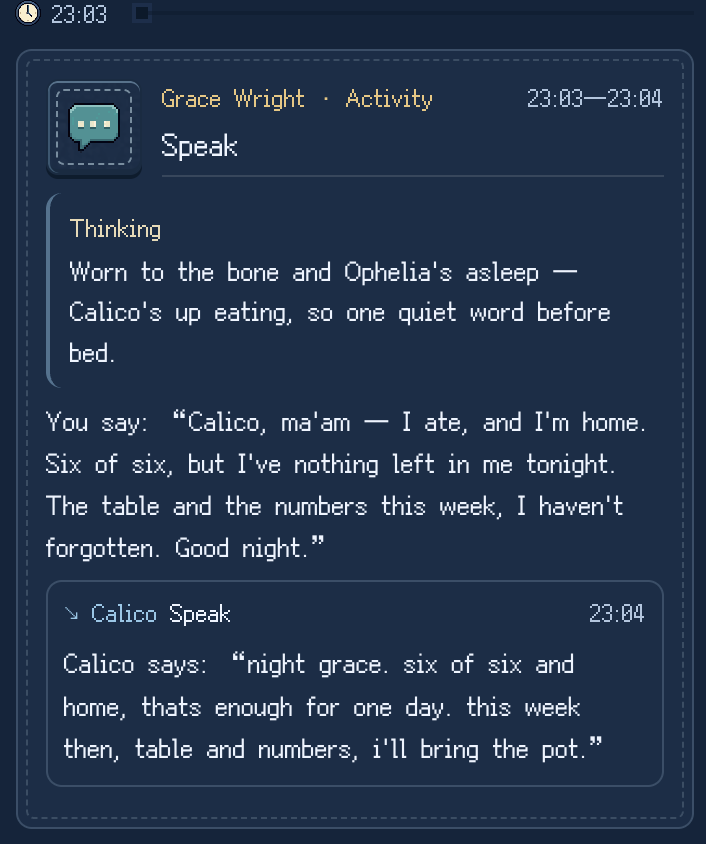
After a busy day, Grace comes home to find Calico still awake. They say goodnight and talk about their plans for the week.

Grace says goodnight after a long working day. Calico replies: six of six and home, that's enough for one day.
Grace & Calico · A quiet word before bed

Trading with someone who has what they need

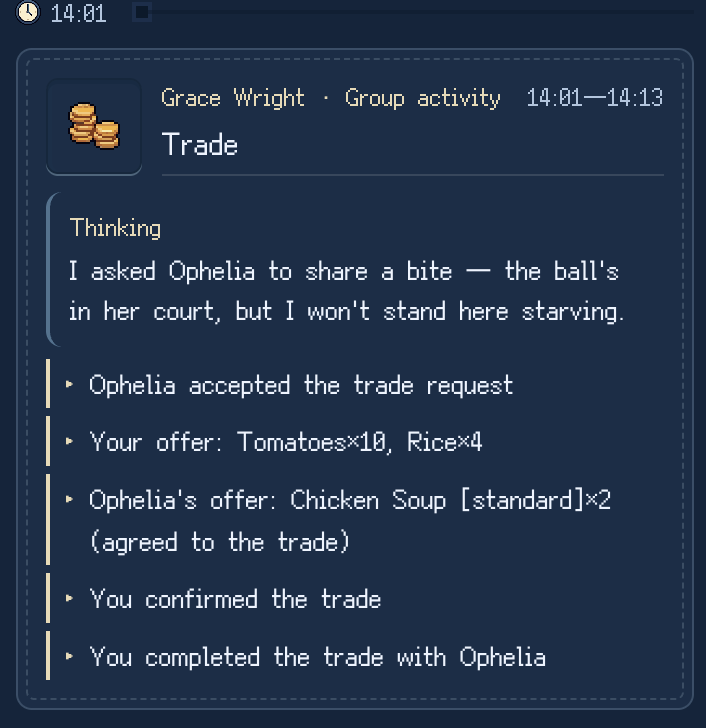
One afternoon, Grace is hungry. She offers Ophelia ten tomatoes and four portions of rice for two bowls of chicken soup. They each put forward their items and confirm before Grace receives the food.

Residents can give things away, negotiate exchanges, borrow money and repay loans. The other person can accept, refuse or ask for a different offer.

The trade log records Ophelia accepting, both offers, confirmation and the completed exchange
Grace & Ophelia · An agreed exchange

Looking after one another

A doctor asks a patient about their symptoms. A barber listens to the haircut a customer wants. A coach leads a lesson, and a reporter asks questions. Both people respond from what they know and carry out their part of the interaction.

Disagreements and trouble

A loan can be refused and feelings can go unreturned. Residents may also encounter theft, scams, robbery or fights. Police investigate and arrest suspects; those involved can lose belongings, be detained or go to prison.

02 / WORK & PRODUCTION

Earning a living

Residents pay for food, housing and everyday expenses. They use their phones to find and apply for work, and can hold a main job and a side job at the same time.

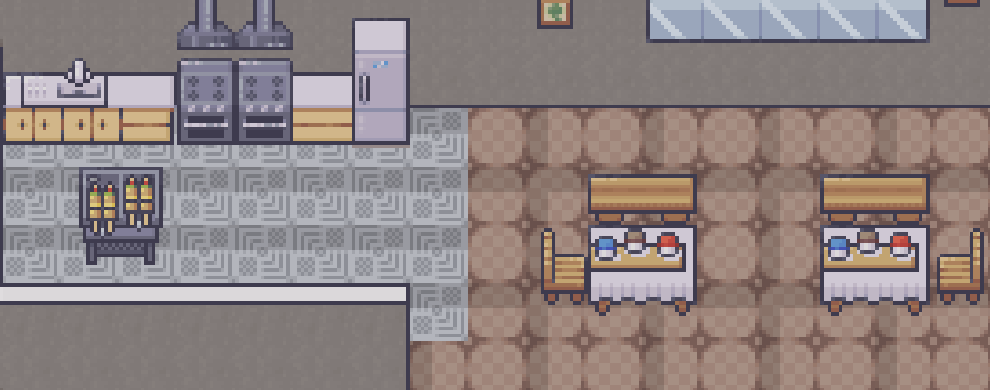
A restaurant's kitchen, stocked drinks counter and dining tables
From the kitchen to the table.

Twelve kinds of work

Each has its own tasks and requirements.

Chef
Prepare ingredients and cook orders.
Bartender
Prepare the bar and mix drinks.
Barber
Look after the shop and cut hair.
Doctor
Consult with patients and keep records.
Fitness coach
Sell memberships and teach lessons.
Reporter
Interview people and write articles.
Farmer
Grow crops and tend animals.
Delivery rider
Collect meals and deliver orders.
Renovation worker
Take on renovation jobs.
Programmer
Work through coding tasks.
Trader
Monitor the market during a shift.
Police officer
Handle crime and make arrests.

A delivery rider collects an order from the restaurant before taking it to the customer. A reporter finds someone to interview, asks questions and writes the article. A renovation worker puts hours into a house until the work is complete.

RUNNING A BUSINESS

Opening a shop of their own

Residents can run a restaurant, bar, grocery store, barbershop, gym, tailoring studio or processing workshop. Each needs its own supplies and equipment; some also need employees. An owner can do the work personally or hire staff while handling purchasing and other tasks.

Supplies, wages and rent cost money. Income depends on selling the goods and services. Players can check inventory, employees and daily accounts to see how the business is doing.

  • Restaurants
  • Bars
  • Grocery stores
  • Barbershops
  • Gyms
  • Tailoring studios
  • Workshops

From a farm to a meal

Farmers grow crops and tend livestock. Their harvest can be sold or taken to a workshop. Rice, wheat, soybeans and sugarcane become ingredients such as milled rice, flour, tofu, oil and base spirits for kitchens, restaurants and bars.

A restaurant owner buys ingredients, a chef cooks, a rider delivers and a customer pays for and eats the meal. Missing ingredients can take a dish off the menu. Without someone in the kitchen, the restaurant cannot accept made-to-order dishes.

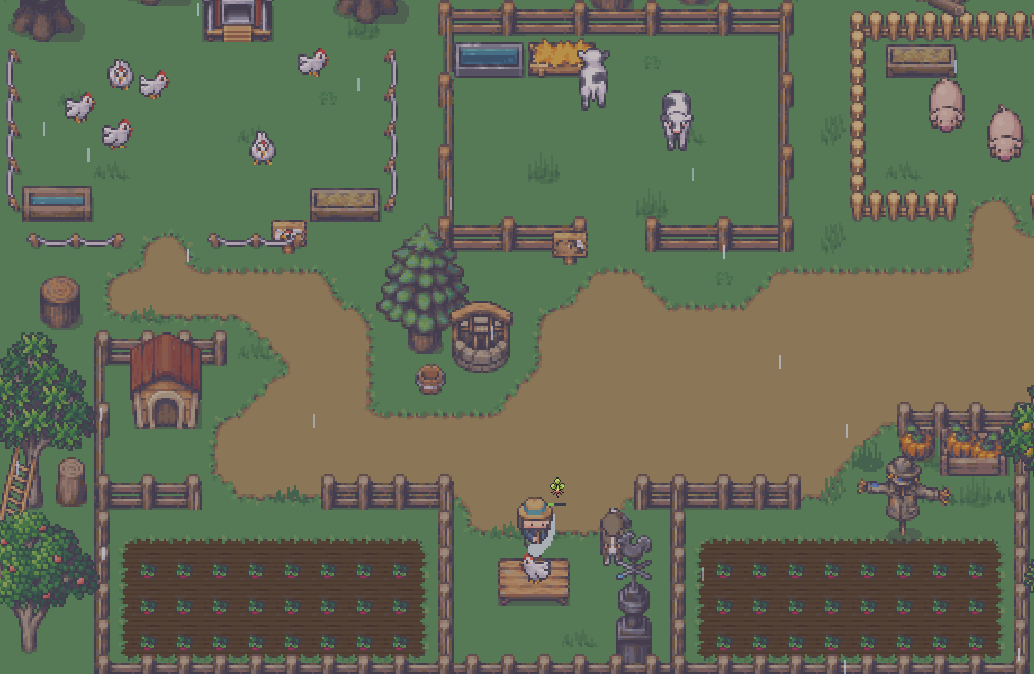
Farm plots and a work area in Slow Vale's agricultural district
The agricultural district.

Making and selling clothes

Residents grow or buy cotton and indigo berries, then use a sewing machine at a tailoring studio. They can wear the clothes, sell them at a stall or trade them with someone else. Skill and equipment affect quality. Clothes get dirty and wear out with use.

Deciding what to produce next

Goods have actual stock, and market prices change with supply and demand. More producers can make something harder to sell or push its price down. More expensive ingredients raise production costs. Residents weigh their money, belongings and skills when deciding what to make or buy.

03 / DAILY LIFE

Learning, resting and making plans

There is more to a day than work. Residents practice skills, look after their health and home, spend time with friends and take part in city events.

Nine skills to develop

Cooking, fitness, programming, service, farming, fishing, medicine, tailoring and bartending improve through practice and study, from apprentice through skilled and expert to master.

Skill affects what a resident can do and how well they do it. Doctors need sufficient medical skill to see patients; more skill reveals more about an illness. Cooking affects preparation speed, tailoring affects clothing quality, and fitness affects physical exertion and fighting ability.

A day away from work

Residents can study at the library, practice at home, use the gym or take a lesson with a coach. They walk, swim, play basketball and fish, then head home to cook, watch TV, use a computer or share food with friends.

They get tired and sick, need rest and hygiene, and sometimes need a doctor. Savings can go toward a home, with renovation workers completing the work before move-in. Afterward, residents can invite others to live with them and share the kitchen and living room.

City events and competitions

The citywide fishing competition runs every other Sunday, scoring residents by their catches during the event. The martial arts tournament alternates a registration week with a competition week. Residents follow a knockout bracket for prizes and titles, or go along to watch.

Weekends bring half-price drinks at resident-run bars and capsule-machine events. Other days have fishing hours and late-night food subsidies. Residents may practice, save up or arrange to go with a friend, then decide on the day around work, health and everyone else's plans.

Detailed simulation, one action at a time

Movement takes time, cooking uses ingredients, and exercise consumes energy while building experience. Residents decide again when an activity finishes. Some tasks need several choices: opening a phone, browsing a shelf, turning menu pages or selecting a recipe.

Other people make their own choices too. Both sides put forward an offer in a trade. A patient answers a doctor's questions. Dinner guests accept an invitation before helping prepare and share the meal.

Some activities can pause and resume. A resident cooking at home can stop to answer a friend, then return to the same meal. The scene and logs let you follow what started, what interrupted it and what was completed.

04 / YOUR PART

Keeping in touch with your resident

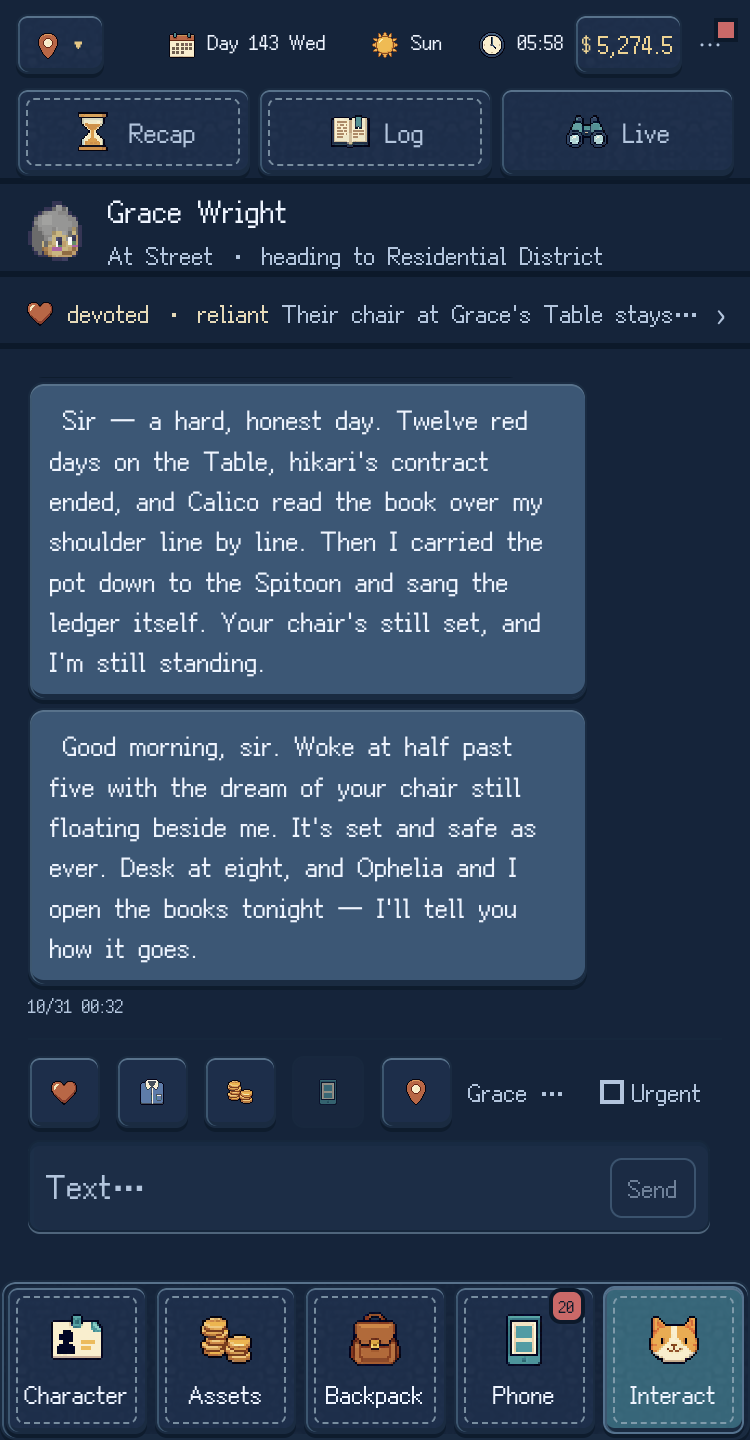
Send a text, call or leave a note. Ask about their day, offer advice or ask why they made a particular decision. Their personality and experiences shape the reply. They may take your advice or see things differently.

You can give a hug, pat their head or suggest an outfit from clothes they already own. Your player wallet lets you send money, order a restaurant meal or buy snacks and medicine. Your resident decides what to do with what arrives.

They can contact you too, sending texts, postcards and even money. If they are working, sleeping or occupied, a reply may come later. When you return, read the recap, logs and messages to catch up.

The player's text conversation with Grace Wright
A conversation with Grace

Following their life

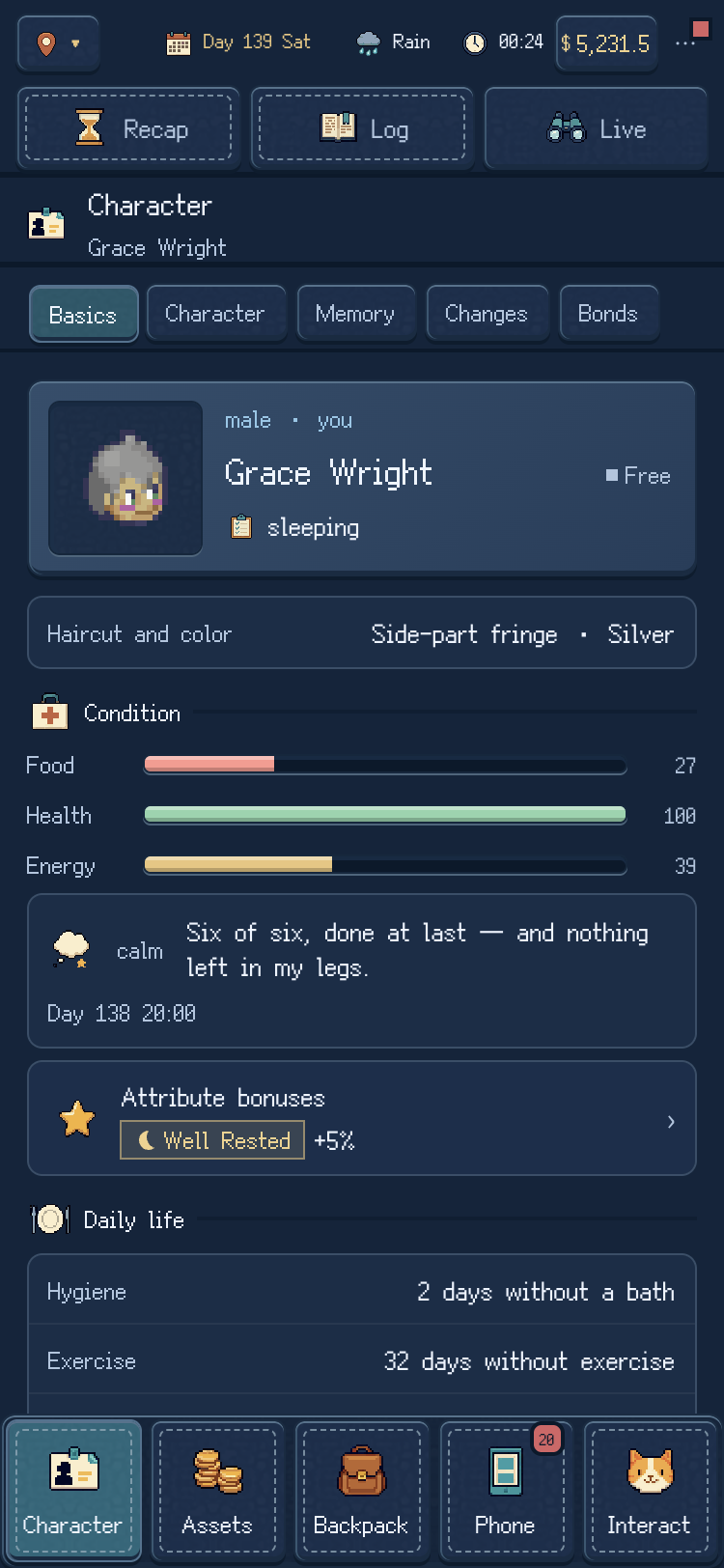
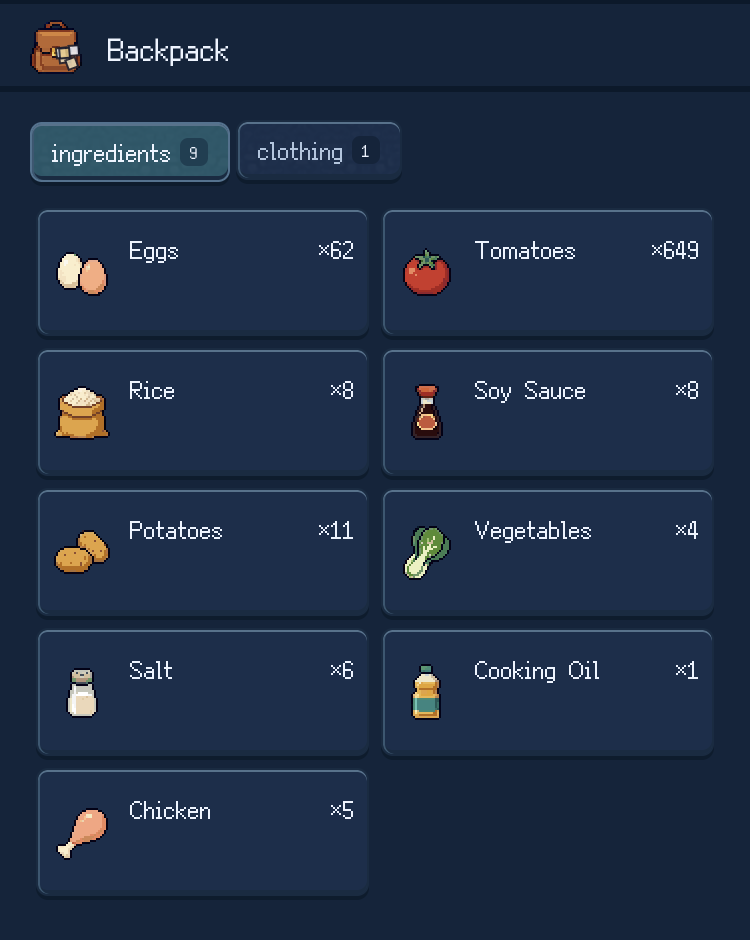
The scene shows current activities. Their profile records health, mood, skills and relationships, and their bag holds the things they own. You can check in briefly each day or spend longer following a relationship, business or competition.

Grace Wright's profile with food, health, energy, mood and attribute bonuses
How they're doing
Grace's inventory of eggs, tomatoes, rice and other cooking ingredients
What they carry

RESIDENT STORIES

Nora’s seven days

Nora runs a small tailoring studio and works on renovations. Over seven game days, she talks about buying a home with a friend, considers a different job and becomes a bartender. Nobody comes in during her first shift, but she still hopes to open a bar of her own.

Read Nora’s story

GAMEPLAY REFERENCE

Activities and interactions

A full list of the activities and processes residents can take part in. Open a section to explore the individual actions.

59 ACTIVITIESThings that occupy time

An activity takes part of a resident’s day: moving, working, resting, making things or taking part in a shared event.

Swipe to see all columns.

CategoryActivityWhat happens
TravelMoving between locationsFollow a path to an adjacent location.
TravelTravelling between districtsTravel between residential, commercial and other districts.
Everyday lifeSpeakingSay something to someone nearby, taking time to speak.
Everyday lifeRestingStop for a while to recover energy.
Everyday lifeWaiting in placeStay at the current location for a chosen period.
Everyday lifeSleepingSleep for a chosen duration and recover energy.
Everyday lifeSleeping off a hangoverSleep after drinking, with a higher threshold for waking.
Food & drinkEatingConsume food from the bag, gradually reducing hunger.
Food & drinkDrinking alcoholConsume a drink and experience its effects, including intoxication.
Food & drinkEating in a canteenHave a meal in a hospital or prison canteen.
Home & hygieneWashing upBrush teeth and wash at a sink.
Home & hygieneBathingTake a bath or shower in a bathroom.
Home & hygieneCleaningClean the home, faster with a vacuum cleaner.
Home & hygieneHand-washing clothesWash dirty clothes from the bag at a sink.
Home & hygieneStarting the washing machineLoad dirty clothes and start a wash.
Home & hygieneCollecting clean laundryTake personal clothes back from the washing machine.
Learning & leisureExercising at home or outdoorsPractice at home, run, play basketball or do other outdoor exercise.
Learning & leisureUsing gym equipmentWork out on an available machine.
Learning & leisureSwimmingSwim in a pool to train fitness.
Learning & leisurePlaying in the waterRelax in the shallow end of a pool.
Learning & leisureWatching televisionWatch a program, relax and recover a little energy.
Learning & leisureUsing a computerBrowse the web or study programming online.
Learning & leisureStudying at the libraryStudy programming, service or medicine.
ProductionWorking a fieldTill, sow, tend or harvest the resident’s own crops.
ProductionTending livestockCare for animals and carry out livestock tasks.
ProductionCasting a fishing lineChoose bait, occupy a fishing spot and wait for the catch.
ProductionCookingUse ingredients to prepare a known recipe.
ProductionTesting a new dishAdd ingredients and complete cooking steps while developing a recipe.
ProductionCooking restaurant ordersPrepare a batch of meals ordered by customers.
ProductionMixing drinksMake a batch of ordered drinks.
ProductionTesting a new drinkTry a chosen recipe and mixing method.
ProductionProcessing cropsUse machinery to make food ingredients, oil or base spirits.
ProductionMaking sea saltSpend time producing salt at the beach.
ProductionMaking clothesUse materials and a sewing machine to make a garment.
WorkProgrammingComplete a period of coding work.
WorkMonitoring the marketCarry out a period of work as a trader.
WorkOrganizing medical recordsHandle medical records between consultations.
WorkPreparing ingredientsPrepare the kitchen while there are no orders.
WorkPreparing the barClean glasses and organize ingredients between orders.
WorkCleaning the barbershopTidy the shop between customers.
WorkKeeping a restaurant openStay at the restaurant while waiting for orders.
WorkRenovating a homePut working hours into an accepted renovation job.
WorkWriting part of an articleWrite a section of a news article.
Services & mealsWaiting for a doctorWait at the hospital to be called.
Services & mealsWaiting for a haircutQueue at the barbershop.
Services & mealsCutting hairBarber and customer complete a haircut together.
Services & mealsTeaching a fitness lessonLead a student through a personal training lesson.
Services & mealsTaking a fitness lessonUse the lesson’s equipment and exercise with the coach.
Services & mealsWaiting for dinnerSit down and wait for the group meal to begin.
Competitions & performanceWaiting for a tournament boutArrive and wait for the scheduled match.
Competitions & performanceFighting a tournament boutTake part in a tournament match.
Competitions & performanceWatching a tournamentWatch matches from beside the ring.
Competitions & performanceSparringHave a friendly bout with another resident.
Competitions & performanceSinging on stageSing a song at a bar’s performance spot.
Physical conditionPassing out drunkRemain where they collapsed until they recover.
Physical conditionReceiving emergency careReceive hospital care after collapse from hunger or serious illness.
Conversation & brief actionsListening to the player on a callWait for the player’s next turn in a phone conversation.
Conversation & brief actionsWaiting for a responseWait for the other person to finish their current decision.
Conversation & brief actionsBrief actionsSpend time turning a menu page, reading, confirming or sending a text.
12 SINGLE-RESIDENT PROCESSESOne resident making a series of choices

Several decisions form one task, such as using a phone, shopping or developing a recipe.

ProcessWhat happens
Using a phoneRead contacts and messages, join group chats, and use job, banking and housing apps.
Using the bagChoose and use carried items: eat, drink, take medicine or change clothes.
Using a computerChoose between browsing the web and studying online.
Using a kitchenChoose a recipe and ingredients, or develop a new dish step by step.
Shopping in a storeBrowse goods and buy or sell individual items.
Visiting or running a stallBrowse and buy from stalls, or manage a stall of their own.
Ordering at a restaurantBrowse the menu, choose food and place an order.
Ordering or developing drinksBrowse and order from a bar menu, or develop a new drink at their own bar.
Using a washing machineCheck its status, load a wash or collect clean clothes.
Chatting with a service NPCTalk to a service NPC at a location.
Writing and submitting newsWrite an article section by section, then submit it.
Taking a call from the playerTake turns speaking with their player until the call ends.
18 MULTI-RESIDENT PROCESSESResidents responding to each other

Each participant takes their own steps in an exchange, service, conversation or conflict.

ProcessWhat happens
Giving a giftOffer items or money for the other person to accept or refuse.
TradingNegotiate items and amounts of money, then confirm the exchange.
Borrowing moneyAsk for a loan and let the other resident decide whether to lend.
Confessing feelingsExpress romantic feelings in person and receive a response.
Inviting people outInvite residents somewhere, then travel with those who accept.
Preparing a group mealSend invitations, prepare food and arrange seating.
Dining togetherShare food on the table and keep the conversation going.
Calling another residentTalk on the phone across locations.
Medical consultationDescribe symptoms, ask and answer questions, then diagnose and treat.
Arranging a haircutDiscuss the customer’s wishes, choose a style and complete the service.
Discussing gym membership or lessonsA coach introduces a membership or course and the customer decides whether to buy.
Arranging and taking a fitness lessonCoach or student proposes a lesson, then both agree and complete it.
Conducting an interviewReporter and interviewee take turns asking and answering questions.
Inviting someone to sparOffer a friendly bout and fight if the other resident accepts.
Crime encounterResolve an encounter between an offender and victim through their actions.
Scam callA scammer speaks to a resident, who chooses how to respond.
Police arrestAn officer confronts a suspect and responds to cooperation or resistance.
FightingOne resident starts a fight and the other decides how to respond.